
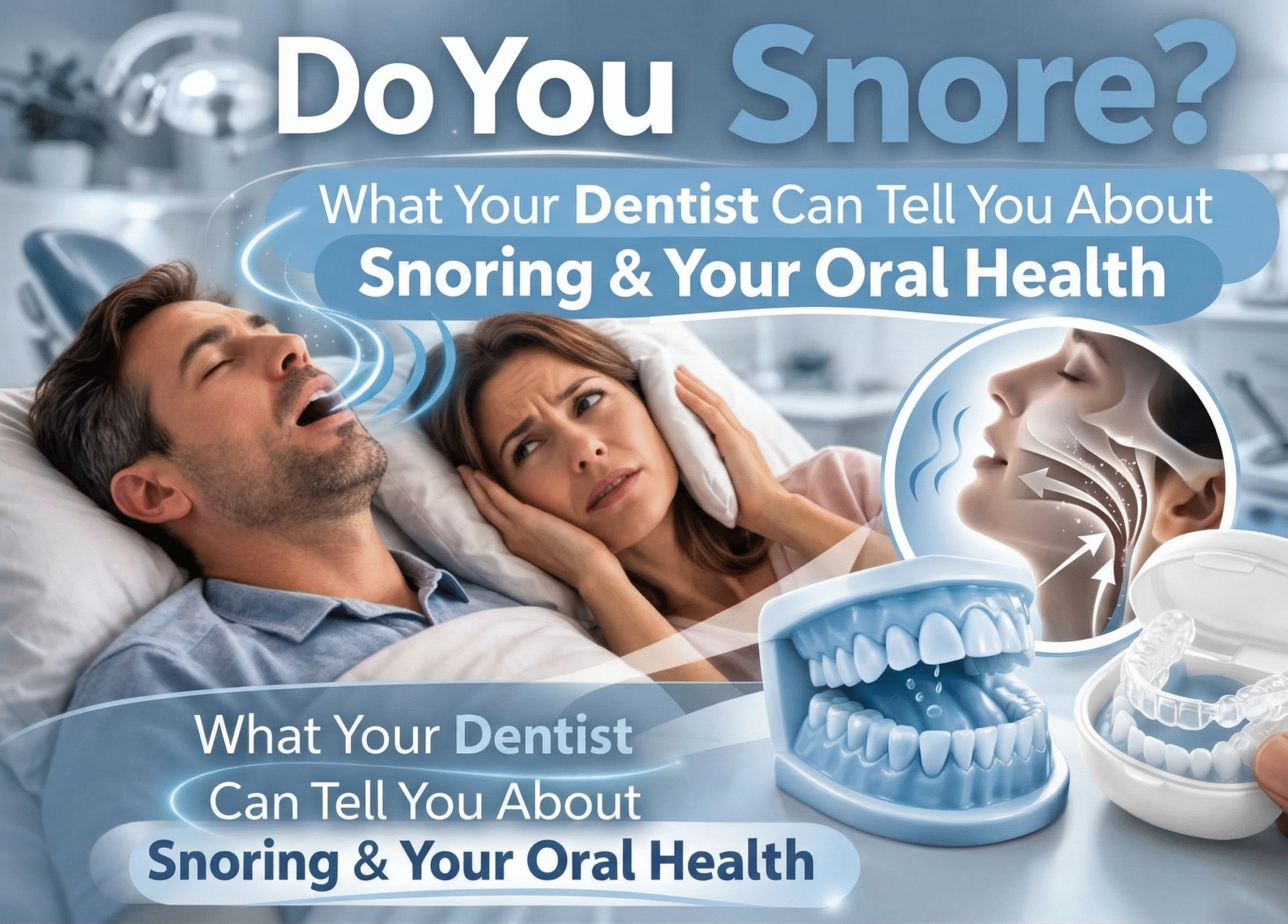
Snoring is often treated as a simple nuisance — something that disrupts sleep or earns a playful complaint from a partner. But in some cases, snoring can also relate to how your teeth, jaw, and airway are positioned.
At Tooth Harmony in Niagara Falls, we sometimes identify signs during routine dental exams that may be connected to nighttime breathing habits. While dentists don’t replace medical sleep specialists, your dental visit can offer valuable insight into how your oral structures affect airflow.
Here’s what you should know.
Why Do People Snore?
Snoring happens when airflow is partially blocked during sleep. As air passes through a narrowed airway, surrounding tissues vibrate — creating the sound we recognise as snoring.
Several factors can contribute to this:
Relaxed throat muscles during sleep
Jaw positioning
Tongue placement
Nasal congestion
Sleeping on your back
Excess weight
In some cases, snoring may also be linked to grinding or clenching at night.
How Your Dentist May Notice Clues
During a routine dental exam at Tooth Harmony, your dentist may observe:
Worn or flattened teeth from grinding
A scalloped tongue (impressions from pressing against teeth)
Enlarged soft tissues
Signs of chronic dry mouth
Jaw tension
These signs don’t automatically mean there is a sleep disorder — but they may suggest that nighttime habits are affecting your oral health.
The Connection Between Snoring and Teeth Grinding

Many patients who grind their teeth at night also report snoring. When the airway narrows, the body may shift the jaw forward or clench to help reopen airflow.
Over time, this can lead to:
Tooth wear
Jaw soreness
Morning headaches
Increased sensitivity
If both snoring and grinding are present, addressing one may help reduce stress on the other.
When Snoring May Need Further Evaluation
Occasional snoring is common. However, it may be worth speaking with a healthcare provider if snoring is accompanied by:
Gasping or choking during sleep
Extreme daytime fatigue
Pauses in breathing
Morning headaches
Difficulty concentrating
In these situations, a sleep study may be recommended by your physician.
Your dentist can work collaboratively with medical professionals if needed, particularly when oral appliances are part of the management plan.
Dental Solutions That May Help
At Tooth Harmony in Niagara Falls, we may recommend:
Custom Night Guards
If grinding is present, a night guard protects your teeth from wear and reduces jaw strain.
Oral Appliance Therapy
In some cases, specially designed dental appliances can help reposition the lower jaw slightly forward to improve airflow during sleep. These are typically considered after proper evaluation and diagnosis.
Monitoring Oral Health
Regular dental exams help us track enamel wear, gum health, and signs of nighttime stress on the teeth.
Snoring, Dry Mouth, and Oral Health

Snoring and mouth breathing often go together. When you breathe through your mouth overnight, saliva flow decreases, leading to:
Increased cavity risk
Gum irritation
Morning bad breath
Sensitivity
Staying hydrated and maintaining regular dental visits can help reduce these effects.
Snoring and Dental Care in Niagara Falls
If you or your partner notice frequent snoring and you’re also experiencing jaw tension, worn teeth, or dry mouth, it may be helpful to mention it during your next dental appointment.
At Tooth Harmony, we focus on how your teeth, jaw, and airway work together. While snoring is often managed medically, your dentist can play a supportive role in protecting your oral health and identifying early signs of nighttime stress.
📞 Schedule your next check-up at www.toothharmony.com or contact our Niagara Falls dental office today.
Sometimes the signs of nighttime habits show up in your smile — and we’re here to help you understand them.
