
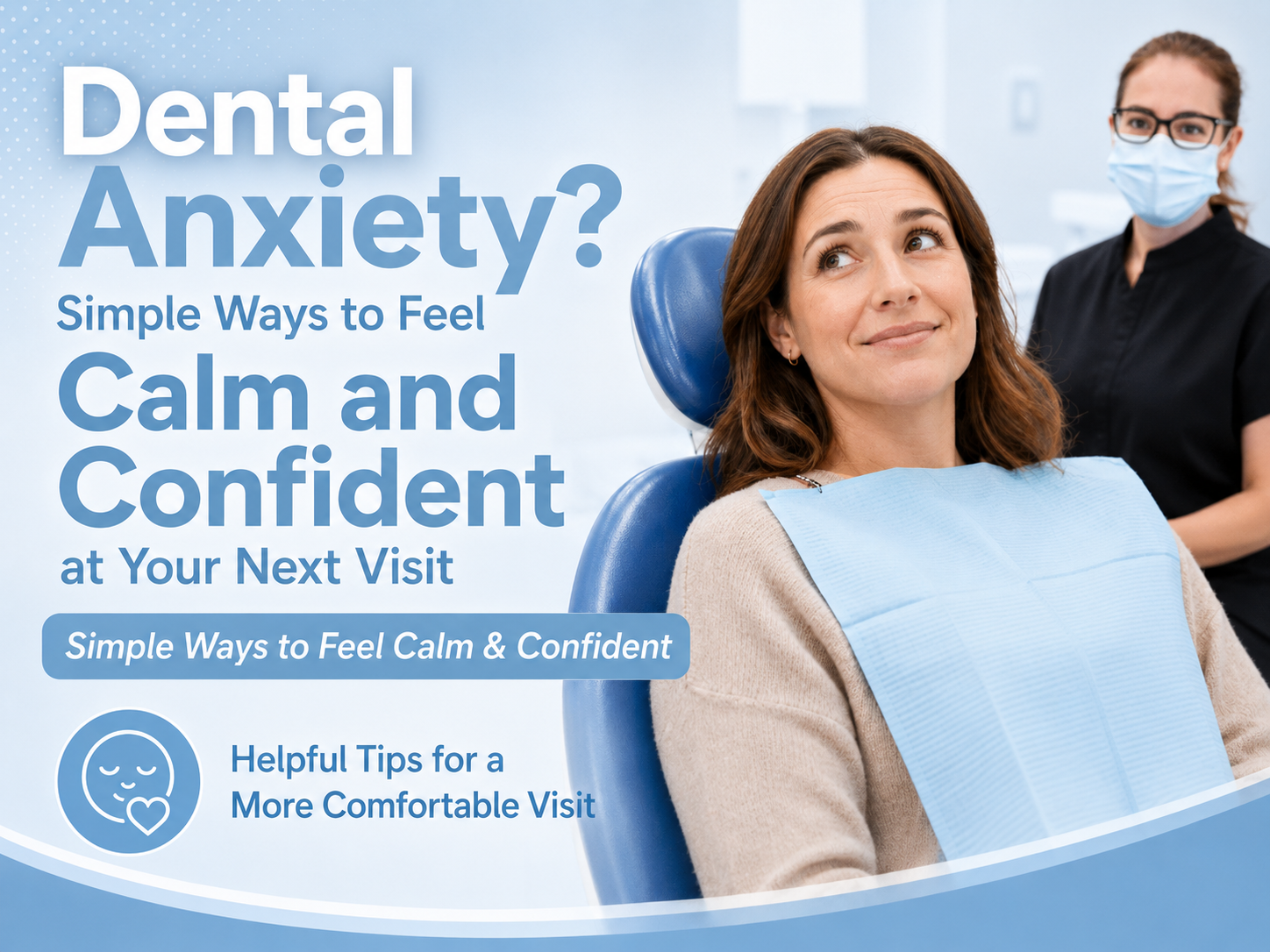
For many people, going to the dentist is not just another appointment—it is something they worry about days or even weeks in advance.
Some patients feel nervous because of a past experience. Others feel anxious about discomfort, sounds, loss of control, or simply not knowing what to expect. Whatever the reason, dental anxiety is very common, and it is nothing to feel embarrassed about.
At Tooth Harmony in Niagara Falls, we know that feeling calm at the dentist is just as important as getting the care you need. The good news is that there are simple ways to make your next visit feel more manageable, more comfortable, and far less stressful.
Here’s how to feel more calm and confident before your next dental appointment.
What Is Dental Anxiety?

Dental anxiety is the stress, fear, or nervousness some people feel before or during a dental visit.
It can range from mild worry to stronger fear that causes people to delay appointments altogether. In some cases, patients avoid care for so long that small problems turn into bigger ones—making future treatment more stressful than it needed to be.
Common triggers may include:
Fear of pain
Bad past dental experiences
Sensitivity to sounds or smells
Fear of needles
Feeling embarrassed about oral health
Worry about losing control during treatment
Anxiety about receiving bad news
No matter the reason, dental anxiety is real—and it deserves to be taken seriously.
Why Dental Anxiety Shouldn’t Be Ignored

It is easy to tell yourself you will book “later” or wait until something starts hurting. But putting off dental care because of fear often creates a harder situation in the long run.
Delaying visits can lead to:
More plaque and tartar buildup
Cavities getting worse
Gum inflammation
Tooth pain
More involved treatment later
More stress around future appointments
In many cases, the most stressful part is the buildup before the visit—not the visit itself. That is why finding ways to manage dental anxiety early can make a big difference.
Tell Your Dental Team You Feel Nervous

One of the simplest and most important things you can do is tell the dental office you feel anxious.
You do not need to hide it or try to act fine. Letting your dental team know ahead of time helps them respond with more awareness, more patience, and better communication.
That may mean:
Explaining things more clearly
Moving at a slower pace
Checking in with you during treatment
Making sure you feel more comfortable before starting
At Tooth Harmony in Niagara Falls, we believe patients deserve to feel heard—not rushed.
Book a Time That Feels Less Stressful

If possible, try choosing an appointment time when you are less likely to feel overwhelmed.
For some people, morning appointments work better because they avoid spending the whole day worrying. For others, a quieter time of day feels easier.
Choosing the right time can help reduce extra stress before you even walk through the door.
Ask Questions Before the Appointment
A lot of anxiety comes from uncertainty.
If you are not sure what will happen during your visit, ask ahead of time. Knowing what to expect can make the experience feel much more manageable.
You can ask things like:
What will happen during this appointment?
How long will it take?
Will it just be an exam and cleaning?
What should I expect if treatment is needed?
Can I let you know if I need a break?
Simple information can go a long way in reducing fear.
Use Small Calming Strategies Before You Arrive

You do not need a huge routine to feel more grounded. Even small steps before the appointment can help.
Some helpful options include:
Taking slow, deep breaths before leaving home
Listening to calming music or a podcast on the way
Avoiding too much caffeine beforehand
Arriving a few minutes early so you are not rushed
Practicing a few slow breaths in the waiting room
The goal is not to pretend you are not nervous. The goal is to help your body feel a little safer and more settled.
Agree on a Signal for Breaks
This is one of the most useful things anxious patients can do.
Before treatment starts, ask your dentist if you can use a simple hand signal—such as raising your hand—if you need a pause.
That helps restore a sense of control. When patients know they can stop for a moment, they often feel much less trapped or overwhelmed.
Even knowing you have that option can help reduce anxiety.
Bring Comfort Items If They Help
Some patients feel better when they bring small things that help them stay calm.
That might include:
Headphones
Music
A stress ball
Lip balm
A water bottle for after the appointment
These small comfort measures can make the experience feel less clinical and more manageable.
Focus on the Benefit, Not Just the Fear

When dental anxiety builds, your mind tends to focus on worst-case scenarios. It helps to gently shift your attention back to the reason you are going.
You are not just “going to the dentist.” You are:
Protecting your teeth
Preventing bigger problems
Taking care of your health
Giving yourself peace of mind
Building confidence for future visits
Sometimes the most empowering part of the appointment is simply proving to yourself that you can do it.
Start with a Simple Visit

If it has been a long time since your last appointment, you do not necessarily need to think of it as diving straight into major treatment.
Sometimes it helps to start with a simple checkup, consultation, or exam so you can rebuild trust and get comfortable again.
That first step matters. Once the fear starts to come down, everything after that often feels easier.
What Your Dentist Can Do to Help

A supportive dental team can make a major difference in how you experience care.
At Tooth Harmony in Niagara Falls, your dentist may help by:
Explaining each step before starting
Moving at a pace that feels manageable
Checking in often
Giving you time to ask questions
Helping you understand your treatment clearly
Creating a more calm, supportive environment
Feeling comfortable at the dentist is not about “being brave enough.” It is about having the right support and approach.
When to Book a Visit
It is a good idea to schedule an appointment if:
You have been putting it off because of fear
You feel nervous even thinking about the dentist
You have sensitivity, bleeding gums, or pain
It has been a long time since your last exam
You want to get back on track with your oral health
You do not need to wait until something becomes urgent. In fact, seeing the dentist sooner often helps keep care simpler and less stressful.
Dental Care in Niagara Falls
At Tooth Harmony, we understand that dental anxiety is real—and we want you to know you are not alone in it. If you have been nervous about booking an appointment, we are here to make the experience feel more supportive, more comfortable, and easier to manage step by step.
Getting dental care should not feel overwhelming. With the right team and a gentle approach, it can feel much more doable than you think.
Book your consultation with Tooth Harmony in Niagara Falls today at www.toothharmony.com and let’s help you feel calm, informed, and confident at your next visit.
