
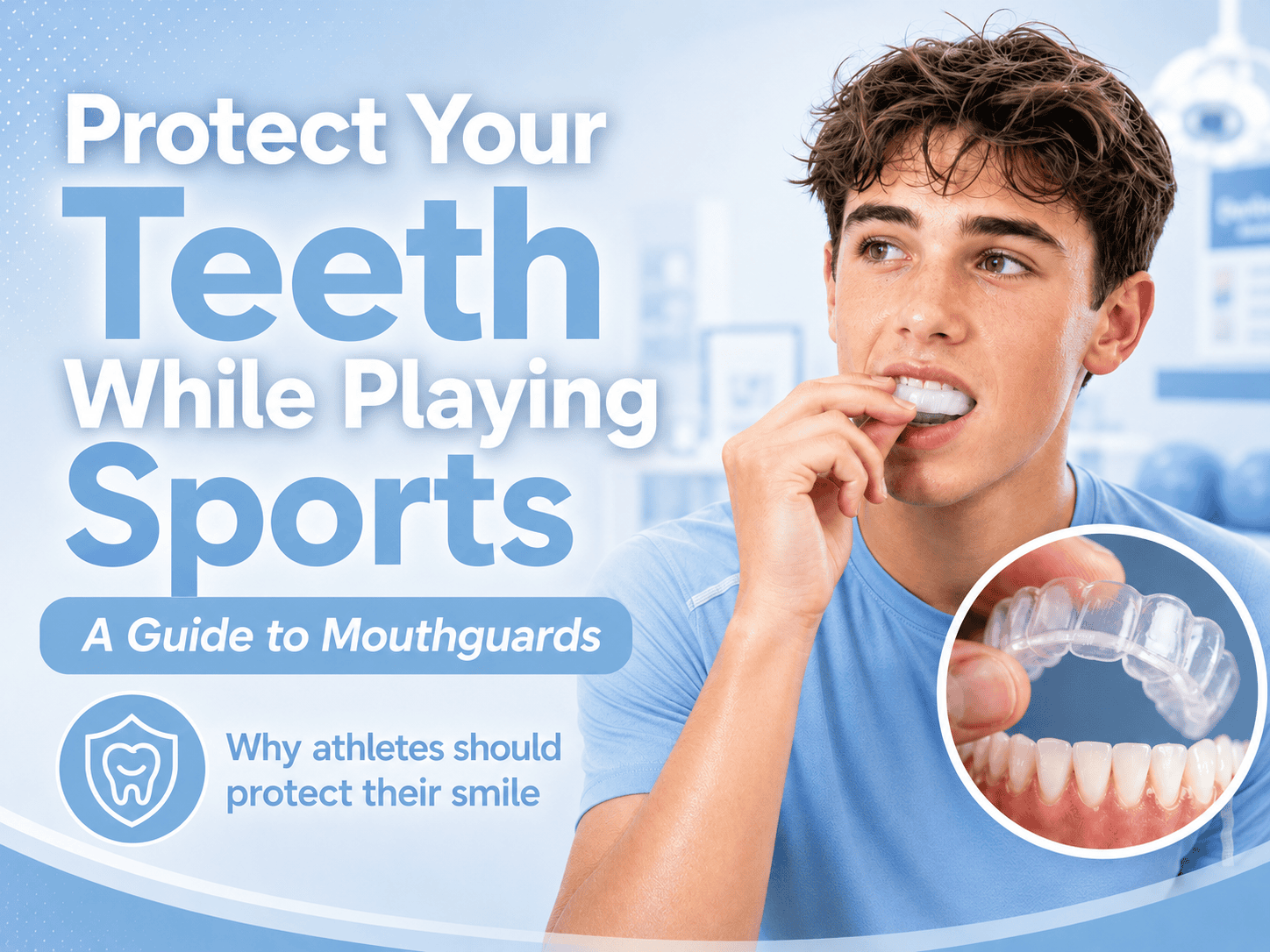
Whether it’s hockey, basketball, soccer, martial arts, or even a casual weekend game, sports come with one thing many people forget to think about until it’s too late: the risk of dental injuries.
A split lip may heal. A sore jaw may settle down. But a chipped, cracked, or knocked-out tooth can turn into a much bigger problem—both physically and financially.
At Tooth Harmony in Niagara Falls, we often remind patients that protecting your teeth during sports is just as important as wearing the right shoes, helmet, or pads. One of the simplest and most effective ways to reduce the risk of dental injury is by wearing a mouthguard.
Here’s what you need to know about protecting your smile while staying active.
Why Mouthguards Matter
A mouthguard is a protective device worn over the teeth to help cushion impact during sports and physical activity.
Its main job is to help reduce the risk of:
Chipped teeth
Cracked teeth
Knocked-out teeth
Cuts to the lips or cheeks
Jaw injuries
Damage from sudden impact to the mouth
Even in sports that are not always thought of as “high contact,” accidents can happen fast. An elbow, ball, stick, fall, or collision can be enough to cause serious damage.
That’s why mouthguards matter more than many athletes realize.
Who Should Wear a Mouthguard?

A lot of people assume mouthguards are only for boxers or hockey players. That’s not true.
A mouthguard can be a smart choice for anyone playing sports where there is a chance of:
Contact with another player
Falling
Getting hit by equipment
Getting hit by a ball or puck
Sudden movement or collision
Sports where mouthguards are often recommended include:
Hockey
Football
Basketball
Soccer
Baseball
Lacrosse
Martial arts
Wrestling
Skateboarding
Biking
Gymnastics in some situations
If there is any realistic chance of impact to the face or mouth, protection is worth considering.
What Can Happen Without a Mouthguard?

Dental injuries during sports can happen in seconds.
Without a mouthguard, an athlete may be more at risk for:
Broken teeth
Teeth being pushed out of position
Root damage
Mouth cuts
Bruising to the lips and cheeks
Emergency dental treatment
Long-term repair costs
In some cases, a sports injury can lead to treatment like bonding, crowns, root canals, or even tooth replacement.
That’s why wearing a mouthguard is not just about prevention—it’s also about avoiding bigger dental problems later.
Are Store-Bought Mouthguards Good Enough?
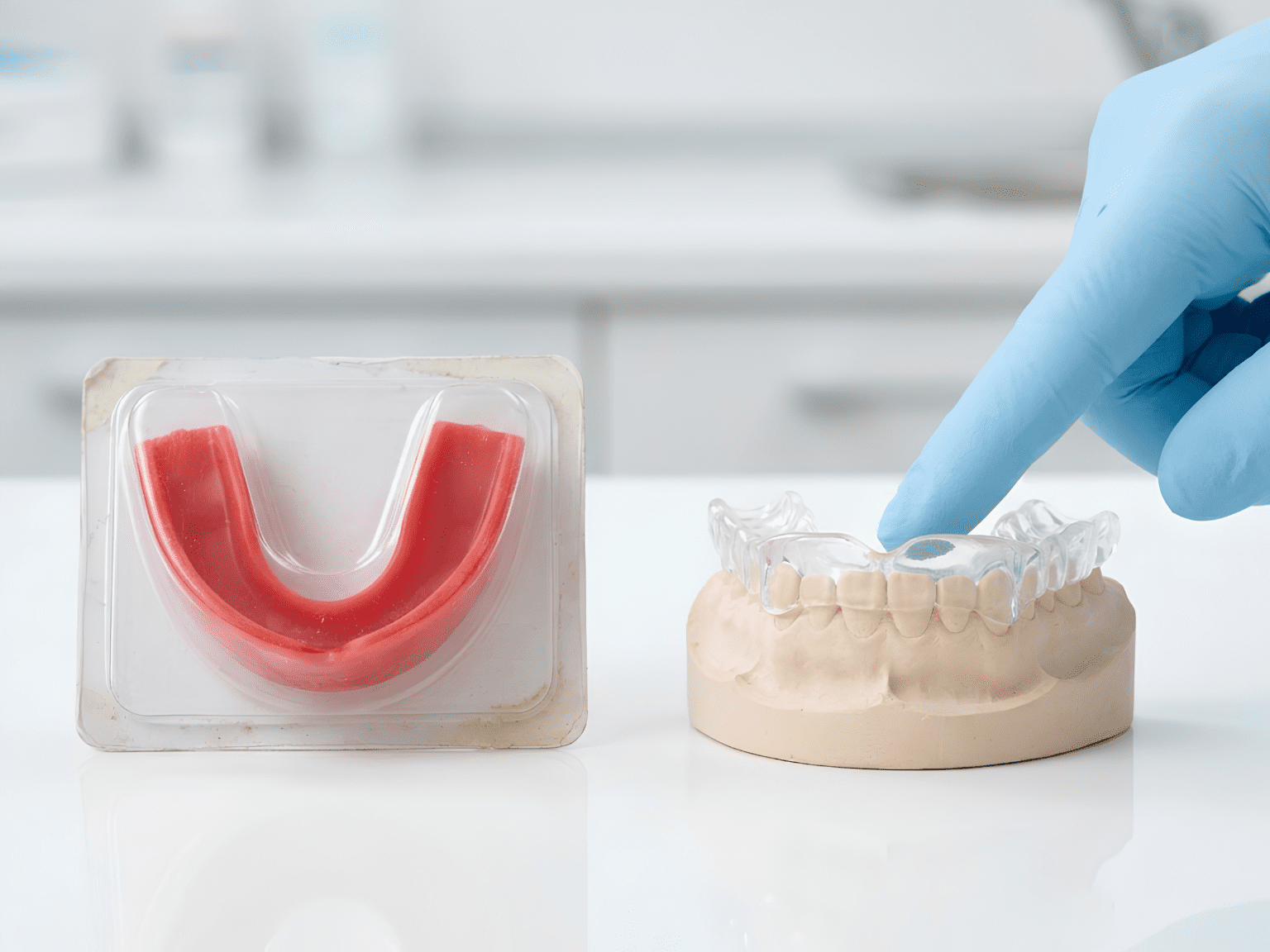
There are a few different types of mouthguards available, and not all provide the same level of protection or comfort.
Common options include:
Stock mouthguards
Boil-and-bite mouthguards
Custom mouthguards made by a dentist
Store-bought options may be better than nothing, but they are often:
Bulkier
Less comfortable
Less secure
Harder to breathe or speak with
More likely to shift during use
If a mouthguard feels awkward or loose, the athlete is less likely to wear it consistently—and that defeats the purpose.
Why Custom Mouthguards Are Often Better
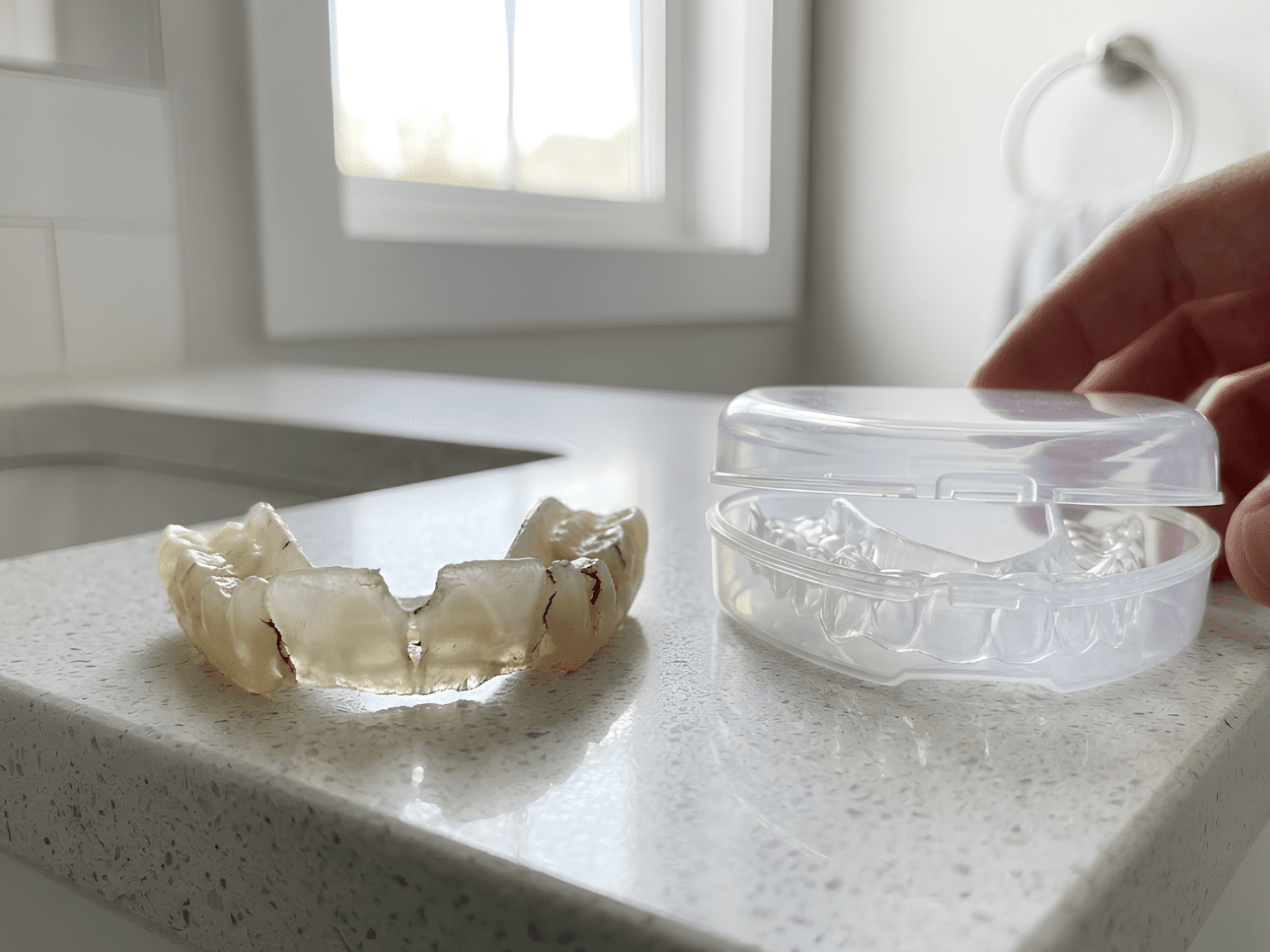
A custom sports mouthguard is made to fit your teeth more accurately.
That can make a big difference in:
Comfort
Fit
Protection
Breathing
Speaking
Willingness to wear it regularly
A better fit usually means better protection and a better chance that the mouthguard actually gets used every time it should.
For athletes with braces, dental work, or specific bite concerns, a properly fitted mouthguard can be especially helpful.
Do Children and Teens Need Mouthguards Too?
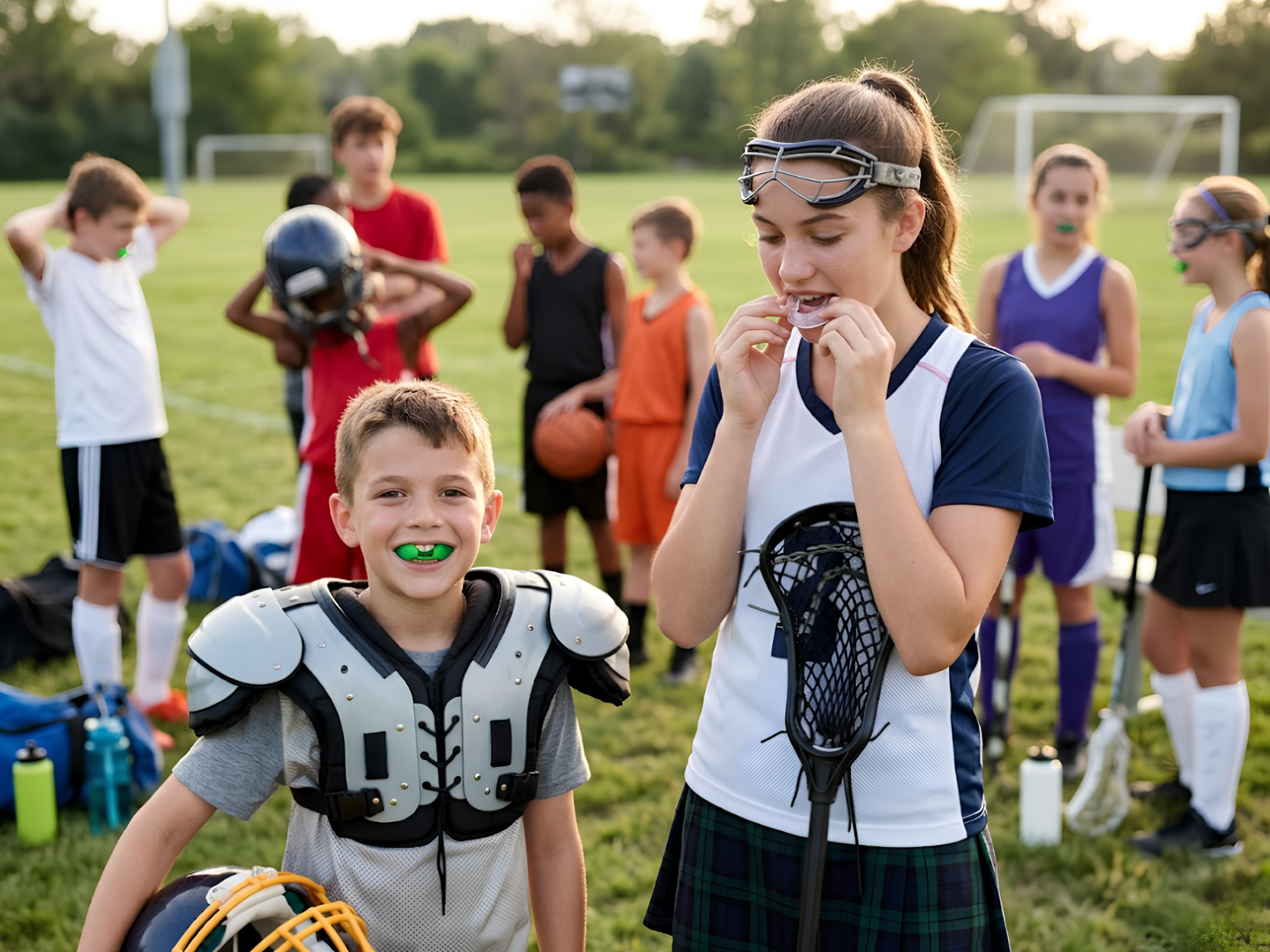
Absolutely.
In fact, kids and teens involved in sports are some of the most important people to protect early. A dental injury at a young age can lead to years of follow-up care, especially if a permanent tooth is damaged.
A mouthguard can help protect growing smiles from injuries that may otherwise cause:
Fractured teeth
Dislodged teeth
Soft tissue injuries
Damage to braces or orthodontic appliances
For active children and teens, prevention matters.
What Makes a Good Mouthguard?
A good mouthguard should:
Fit securely
Feel comfortable
Stay in place
Allow easy breathing
Let the athlete speak if needed
Be durable enough for the activity
If a mouthguard is constantly slipping, causing gagging, or making it hard to breathe, it may not be the right fit.
The best mouthguard is the one that offers real protection and is comfortable enough to wear consistently.
How to Care for a Mouthguard
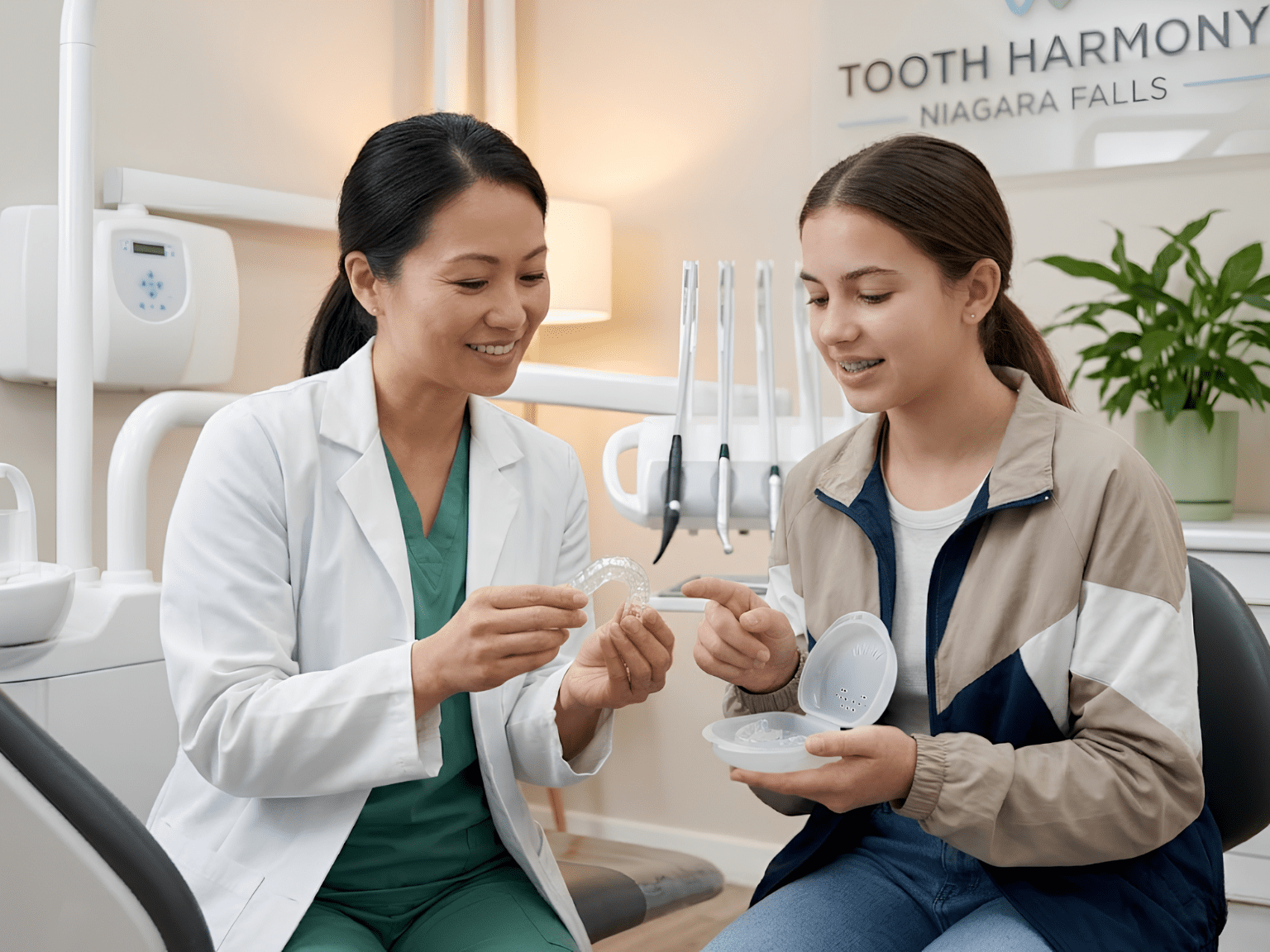
A mouthguard needs proper care to stay clean and effective.
Helpful habits include:
Rinsing it before and after use
Letting it dry properly
Storing it in a ventilated case
Keeping it away from heat
Checking it for wear or damage
Replacing it when it no longer fits properly
A damaged or poorly fitting mouthguard may not protect the way it should.
When a Mouthguard Should Be Replaced
A mouthguard may need to be replaced if:
It becomes loose
It shows visible wear
It cracks or tears
It no longer fits comfortably
A child or teen’s teeth have shifted or grown
Orthodontic treatment changes the fit
Kids, teens, and athletes with changing dental needs may need updates more often than adults.
What Your Dentist Looks For

If you ask about a mouthguard during your visit at Tooth Harmony in Niagara Falls, your dentist may check for:
Bite alignment
Existing dental work
Braces or appliances
Tooth wear
Areas needing extra protection
Fit concerns with current mouthguards
This helps ensure that the protection you are wearing is actually working for your mouth—not just any mouthguard off the shelf.
When to Book an Appointment
It’s a good idea to book a visit if:
You or your child plays contact or impact sports
A current mouthguard feels uncomfortable
The mouthguard no longer fits properly
There are braces or dental restorations to protect
You want to ask about a custom sports mouthguard
A sports injury has already happened and needs evaluation
The best time to think about protection is before an injury happens—not after.
Dental Care in Niagara Falls
At Tooth Harmony, we believe protecting your smile should be part of every athlete’s routine. Whether you play sports yourself or want to protect your child’s teeth during games and practices, the right mouthguard can make a real difference.
A small step now can help prevent painful and expensive dental problems later.
Book your consultation with Tooth Harmony in Niagara Falls today at www.toothharmony.com and let’s help keep your smile protected on and off the field.
